CategoriesExclusive

Insurtech Innovation: From Reactive to Predictive Models

January 10, 2025

The insurance industry is rapidly transitioning from reactive, post-event responses to predictive and proactive risk management models. This shift is driven by advanced technologies like artificial intelligence (AI) and the Internet of Things (IoT), which enable real-time insights and decision-making. For the FinTech sector, this transformation presents opportunities to integrate innovative insurance solutions into financial services ecosystems, enhancing customer experiences and unlocking new revenue streams.

Traditional Underwriting vs. Real-Time Risk Assessment

Traditionally, insurers relied on static data such as age, income, or credit scores to make underwriting decisions. However, AI and IoT are revolutionizing this model by enabling real-time, behaviour-based risk assessments.

Opportunities for Banks

For banks, this trend offers avenues for deeper partnerships with insurers. For example, a digital bank could integrate IoT-powered auto insurance with its car loan products, enhancing its value proposition while collecting cross-industry data to refine customer insights. Research indicates that integrating AI and IoT in insurance could reduce underwriting costs by 30-50% and claims costs by up to 20%. Fintech firms can leverage this efficiency by building AI-driven analytics solutions for insurers.

Usage-Based Insurance (UBI): Personalized and Data-Driven Coverage

Usage-based insurance (UBI) exemplifies personalization, using telematics and IoT data to adjust premiums based on real-time usage or behaviour.

In auto insurance, UBI models such as pay-as-you-drive (PAYD) and pay-how-you-drive (PHYD) directly link premiums to driving habits.

For FinTech and B2B banking tech players, UBI seamlessly integrates with financial products. Digital banks can bundle UBI auto insurance with vehicle loans, offering competitive premiums to safe drivers. This integration not only enhances the bank’s offerings but also fosters customer loyalty. According to an independent report, the global UBI market, valued at $25 billion in 2020, is projected to grow to $65 billion by 2027, presenting lucrative opportunities for collaboration between fintech firms and insurers.

Embedded Insurance: Integrating Coverage at the Point of Need

Embedded insurance integrates coverage directly into financial and e-commerce ecosystems, offering seamless protection & enhancing customer journeys. Imagine a banking app that provides travel insurance during airline ticket purchases or device insurance with a loan for a new smartphone. This approach increases customer convenience while diversifying revenue streams for banks and fintech platforms. Businesses adopting embedded insurance report an 8-10% increase in conversion rates and a fivefold increase in lifetime customer value, says Cover Genius.

For fintech founders, embedded insurance APIs offer a low-code way to integrate insurance into existing platforms. This is especially advantageous for neobanks and payment platforms seeking differentiation in crowded markets.

AI-Driven Claims Processing

Claims processing, a longstanding bottleneck in the insurance industry, is being transformed by AI and blockchain technologies. Leading Insurtech companies like Lemonade use AI-driven bots to process claims in seconds. Fintech firms can replicate this success by embedding AI tools into their platforms to streamline insurance claims tied to loans or credit card protection plans. Blockchain-based smart contracts enhance the claims process further, enabling automated payouts when predefined conditions are met. This integration creates operational synergies and delivers faster, more transparent claim settlements.

The Future of Insurance and FinTech Collaboration

The shift from reactive to predictive insurance models aligns perfectly with the digital-first ethos of FinTech and BankTech companies. As insurers adopt AI, IoT, and blockchain technologies, fintech firms are uniquely positioned to act as enablers, integrating predictive insurance solutions into their platforms to drive growth.

Unlocking New Product Categories

Digital banks can explore new product categories, such as usage-based auto insurance bundled with car loans or health-focused policies linked to credit scores. Payment platforms can offer contextual coverage at checkout, and fintech startups specializing in AI analytics can co-create real-time risk assessment tools.

Market Growth and Opportunities

Research suggests, the global Insurtech market is projected to grow to $152 billion by 2030, driven by demand for predictive and personalized solutions. For fintech founders and bankers, collaboration, innovation, and customer-centricity will be key to unlocking this market. By embedding insurance into financial ecosystems, automating claims, and leveraging IoT-driven models, the industry can deliver transformative products that redefine financial protection in the digital age.
CategoriesExclusive

Reimagining Corporate Banking: Meeting the Needs of SMEs in the Middle East and India

December 04, 2024

The Small and Medium Enterprises (SMEs) are the lifeblood of innovation and growth in the vibrant economies of the Middle East and India. However, despite their critical role, these businesses often face significant barriers in accessing the financial services they need to flourish. The Cedar-IBSi FinTech Lab, through the progress of its members have seen the transformative power of reimagining corporate banking to better serve SMEs.

Navigating Banking for SMEs and their challenges

SMEs in India and Middle East are incredibly diverse. However, they share common challenges – limited access to credit, cumbersome banking processes, and a lack of tailored financial products. Traditional banks with legacy systems and rigid structures often fail to meet the unique needs of SMEs.

  1. Credit Constraints: SMEs often find it difficult to secure financing due to stringent requirements and lengthy approval processes.
  2. Complex Banking: Traditional banking practices, such as onboarding and rigid credit scoring, hinder the SMEs’ growth.
  3. Limited Tailored Solutions: Generic banking products fail to address the specific needs of SMEs, leaving them underserved.

Reimagining Corporate Banking for SMEs

To unlock the full potential of SMEs, corporate banking must evolve to address their unique challenges.

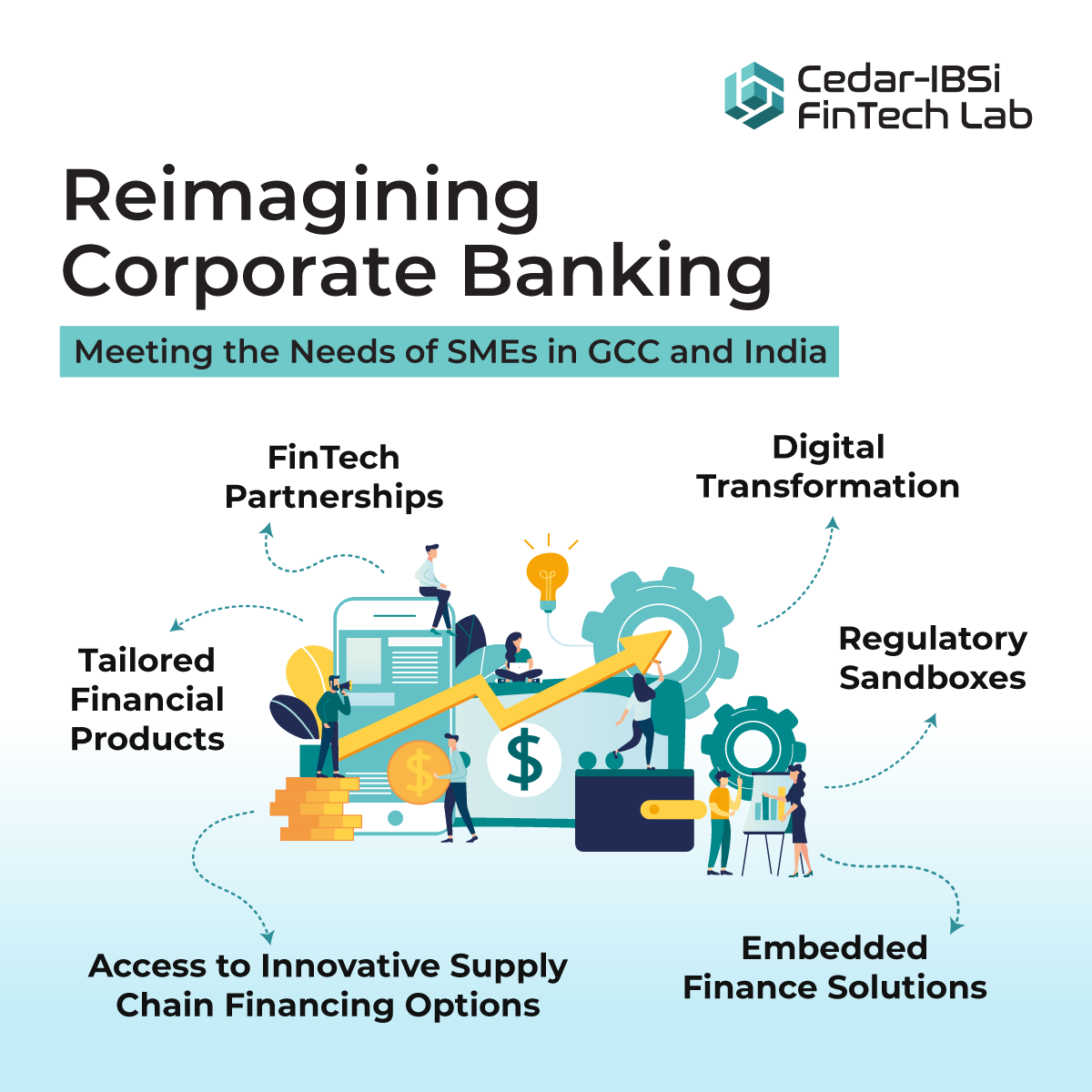
  1. FinTech Partnerships: Collaborating with FinTechs can streamline processes, enhance credit scoring, and provide innovative solutions.
  2. Supply Chain Financing: By offering early payment options, banks can improve SMEs’ cash flow and strengthen supply chain relationships. This approach assists thin-file customers in securing credit.
  3. Embedded Finance: Integrating financial services into SMEs’ workflows can simplify their financial management and create more opportunities.
  4. Tailored Products: Developing flexible and scalable products, such as micro-loans and GST-flow-based lending (in India), can cater to SMEs’ specific needs. Flexible and scalable features to adapt to evolving nature of SMEs such as dynamic loan terms based on business cycles will help.
  5. Digital Transformation: Embracing digital banking can improve service delivery and empower SMEs with efficient financial tools.

Success Stories in Corporate Banking for SMEs

  1. Middle East Success Story: Mashreq Bank and Invoice Bazaar: Mashreq Bank in the UAE partnered with Invoice Bazaar, a FinTech startup, to it’s platform to offer early payment options for invoices, improving cash flow. The partnership has enabled Mashreq Bank to extend its reach to a broader SME customer base, providing them with much-needed liquidity.
  2. India’s Digital Revolution: ICICI Bank and InstaBIZ: ICICI Bank launched InstaBIZ, a comprehensive digital banking platform tailored for SMEs that offers a range of services, including instant overdraft facilities, business loans, and digital payments. Using AI and machine learning to streamline loan approvals and provide personalized financial solutions, it empowers SMEs to manage their finances more effectively and access a wider range of financial services.
  3. Regulatory Sandbox in Bahrain: The Central Bank of Bahrain (CBB) launched a regulatory sandbox in 2017 to foster FinTech innovation and to allow firms to test their solutions in a controlled environment with regulatory oversight. Tarabut Gateway, a FinTech company used the sandbox to develop and refine its open banking platform. This platform now facilitates secure data sharing between banks and FinTechs, enhancing financial services for SMEs.
  4. Regulatory Sandbox in India: The Reserve Bank of India (RBI) introduced its regulatory sandbox framework in 2019 to promote innovation in the FinTech sector. Cashfree, a participant of the program, tested its payment solutions to refine its products and ensure compliance with regulatory standards, ultimately providing more efficient payment solutions for SMEs.

By reimagining corporate banking, we can empower SMEs to thrive. By collaborating with FinTechs, offering tailored solutions, embracing digital technologies, and fostering innovation through regulatory sandboxes, we can create a banking ecosystem that supports the growth and success of SMEs.

The future of corporate banking lies in its ability to adapt and innovate. By addressing the unique needs of SMEs in the Middle East and India, banks can unlock significant economic potential, driving growth and prosperity in these regions.

A direct call to action for CXO bankers and FinTech founders: The time to act is now. Embrace the opportunities presented by digital transformation and FinTech innovation to better serve SMEs.

CategoriesExclusive

The Impact of “Buy Now, Pay Later” (BNPL) on Personal Finance Management

November 19, 2024

The rise of “Buy Now, Pay Later” (BNPL) services has revolutionized consumer finance, offering a convenient and flexible alternative to credit cards.. Platforms like Klarna, Afterpay, Affirm, and PayPal, enable a transformative way for people to make purchases and spread payments over several weeks or months, often without interest if paid on time.

The appeal is evident: convenience, flexibility, and the psychological ease of delaying payments. However, beneath this facade, BNPL also brings financial risks and challenges that require careful management and strategic thinking, especially in today’s fast-evolving digital economy.

Explosive Growth and Consumer Adoption

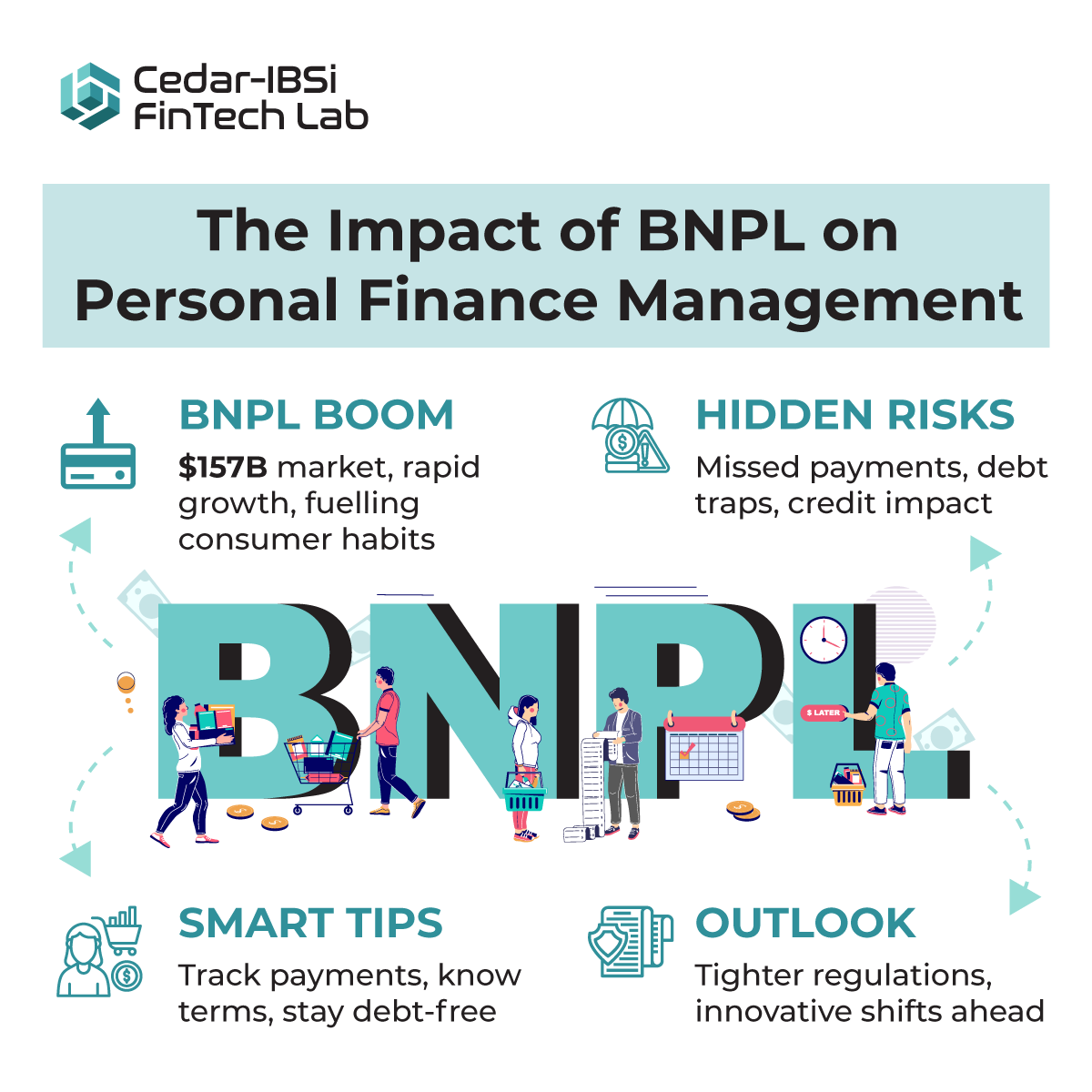
BNPL’s growth has been staggering. In 2023, the market was valued over $157 billion, projected to grow at a CAGR of nearly 25% over the next five years. E-commerce platforms have embraced BNPL, with over 60% of online merchants offering these options at checkout. In Australia, for example, BNPL transactions have become so pervasive that nearly 30% of online shoppers have used BNPL services at least once in the past year. In the U.S., reports indicate that BNPL accounts for over $100 billion in annual spending—a clear indication of how embedded these services have become in consumer habits.

This surge in BNPL adoption is driven by convenience, seamless integration into the checkout process, and strategic partnerships with major retailers. This is an attractive option, especially for younger generations like Millennials and Gen Z, who prefer to avoid traditional credit cards.

For merchants, BNPL boosts conversion rates and average ticket sizes. According to research from PYMNTS.com, merchants have observed a 20-30% increase in conversion rates and a 30-50% uptick in average ticket size when BNPL options are offered.

Drawbacks of BNPL

However, BNPL services come with potential drawbacks. One major concern is the risk of debt accumulation. A significant portion of BNPL users fall behind on payments, negatively impacting their credit scores. A study by Credit Karma in early 2023 revealed that 34% of BNPL users reported falling behind on at least one payment, and 72% of those who missed payments saw a negative impact on their credit scores.

The ease of use and perceived affordability of BNPL can lead to impulse spending, making it difficult to track overall spending and manage cash flow.

Another issue is the lack of regulatory oversight as compared to credit cards. However, with the rapid adoption of BNPL, financial regulators in regions like the United States, Australia, and the European Union are beginning to scrutinize these platforms.

Managing BNPL Responsibly

Given the growing integration of BNPL in everyday financial transactions, it’s crucial for consumers to use these services wisely. Here are some key strategies for managing BNPL responsibly:

  1. Track All BNPL Obligations: Use budgeting apps or financial tools to avoid missed payments.
  2. Treat BNPL Like Credit: Approach BNPL commitments with caution, as a traditional loan along with its total financial obligation.
  3. Avoid Overlapping Instalment Plans: Juggling multiple BNPL payments can lead to cash flow issues.
  4. Review Terms and Conditions: Understand the fees and potential penalties before agreeing to a BNPL plan.

As BNPL continues to grow in popularity, financial education becomes crucial. Consumers should be aware of the implications and use these services responsibly.

For FinTech founders, bankers, and technology vendors, the BNPL trend presents a dual opportunity: to innovate and cater to evolving consumer needs and foster responsible lending practices.

The future of BNPL likely involves tighter regulations, data-driven credit assessments, and innovations designed to empower consumers.

CategoriesExclusive

A New Dawn for FinTech; A Shift in the Paradigm

November 08, 2024

The recent FinTech landscape has been marked with a series of high-profile failures. The Reserve Bank of India’s recent press release announcing clampdown on certain NBFCs; the demise of promising startups like Tally, a 9-year-old company last valued at US $855 million; FinTech funding deal volumes at all-time lows since 2017; there are many setbacks. However, beneath the surface, a significant transformation is underway, shaping the future of FinTech.

The initial euphoria surrounding FinTech led to a proliferation of startups, many of which lacked a clear value proposition or even a sustainable business model. As the market matured, investors and regulators alike became more discerning, scrutinizing companies for their ability to deliver tangible benefits to consumers and businesses. This increased scrutiny has forced FinTech companies to adapt and evolve. Those that have survived the initial wave of disruption are now focusing on building robust, compliant, and customer-centric solutions. They are leveraging advanced technologies like artificial intelligence (AI) and machine learning (ML) to automate processes, enhance security, and personalize services.

Furthermore, the traditional banking sector is embracing digital transformation. Banks are recognizing the potential of FinTech to drive innovation and improve customer experiences. Collaborations and partnerships between FinTech companies and banks are becoming increasingly common, fostering a more inclusive and competitive financial ecosystem. The financial technology industry, globally, is undergoing a tectonic shift. FinTechs, banks, and regulators are all maturing.

While challenges remain, the future of FinTech remains bright. As the industry matures, we can expect to see a new generation of FinTech companies emerge, offering innovative solutions to address pressing financial needs. By focusing on compliance, customer-centricity, and technological innovation, FinTech can continue to drive financial inclusion and empower individuals and businesses worldwide.

Regulators have strengthened their oversight by implementing policies and frameworks aimed at protecting end consumers. This shift has prompted banks to change their approach to new FinTechs, moving from a competitive stance to one of cooperation and collaboration.

The ecosystem has also seen mature ex-bankers becoming founders now who understand the regulations. These executives know that FinTech is not just a checking account with fancy UI/UX on a mobile app. Fortunately, banks know this too, and they have started to invest in technology. The Middle East has ~178 banks with US $2 trillion in assets, spending US$10+ billion annually on banking and new-age technologies.

The rise of AI/ML is revolutionizing the way financial services are delivered. These technologies are enabling FinTech companies to develop sophisticated solutions that can automate processes, improve decision-making, and enhance customer satisfaction. While the future of FinTech is undoubtedly uncertain, it is far from bleak.

The industry is evolving, and those companies that can adapt to the changing landscape and deliver real value to customers will thrive. As the dust settles, we can expect to see a more mature and sustainable FinTech sector emerge.

CategoriesExclusive

The Critical Role of Fraud Management in Scaling B2B FinTech Startups

October 16, 2024

In the fast-paced world of B2B FinTech, fraud management is not just a regulatory checkbox—it’s a cornerstone of sustainable growth and long-term success. Managing fraud is not just about compliance; you have to protect your business, customers, and reputation. For FinTech founders, especially those aiming to scale, addressing fraud early can save you from costly mistakes down the line. This blog underscores the paramount importance of integrating RegTech based fraud management solutions into B2B FinTech operations right from the outset.

As the volume of sensitive financial data and transactions handled by FinTechs increase, fraudsters too become more sophisticated. Without solid fraud prevention measures in place, a single breach can lead to significant financial losses, reputational damage, and loss of customer trust. These factors can be devastating for a young company. In the B2B space, where partnerships and trust are paramount, companies that fail to prevent fraud early on may struggle to secure long-term relationships or attract further investment.

Fraud management is a competitive advantage. Prioritizing robust fraud prevention strategies signals to your customers and investors that you take risk management seriously. This can set you apart in a crowded market.

B2B FinTech is also highly sensitive to disruptions. If your platform is seen as vulnerable to fraud, larger corporate clients will hesitate to trust you with their transactions. This is especially critical when dealing with financial institutions, enterprise-level clients, or international payments. By embedding fraud prevention into your core systems from day one, you are essentially future proofing your operations and showing clients and investors that you have a plan for scalability.

Enter RegTech; transforming how FinTech companies handle fraud detection and compliance. By using advanced technologies like AI and machine learning, RegTech can monitor real-time transactions, flag suspicious activities, and ensure ongoing compliance with global regulations. These automated tools reduce the complexity of regulatory frameworks, freeing up your team to focus on growth while also protecting your platform from bad actors.

Integrating RegTech solutions early equips you better to handle fraud and makes you more appealing to investors. Venture Capital (VC) companies are increasingly looking for startups that have these systems in place, as they reduce operational risk and demonstrate a clear path to scaling without regulatory hiccups. These startups also enjoy the perception of a low-risk investment with high potential returns, as a result of regulatory readiness and operational integrity.

Take, for example, B2B payment platforms that integrated RegTech-driven fraud management systems from the start. These startups not only managed to avoid costly breaches but also earned trust from enterprise clients, enabling faster onboarding and expansion. By focusing on fraud management from the beginning, they positioned themselves as reliable partners, which attracted additional funding and strategic partnerships.

Secure Pay Solutions, a startup offering B2B lending services that has prioritized fraud management, earned the trust of both clients and VCs. Their well-structured fraud prevention strategy became a key differentiator, helping them stand out in a crowded market and attract significant investment.

For B2B FinTech startups, integrating fraud management solutions from day one is first, a strategic imperative, and then a regulatory mandate. A robust fraud prevention framework can protect customer data, build investor confidence, and drive growth. Startups that recognize and act on this insight are better prepared to thrive in the competitive FinTech landscape and build themselves a secure and scalable future.

CategoriesExclusive

How Cloud-Native Infrastructure is Reshaping Core Banking System

September 26, 2024

In the digital age, banking has rapidly evolved, with customers demanding seamless, 24/7 services. Many banks remain burdened by legacy core banking systems that limit their ability to meet these demands. These older systems often struggle to integrate modern technologies such as artificial intelligence (AI), machine learning (ML), and real-time analytics, resulting in increased operational costs and reduced agility.

In this rapidly evolving landscape of financial services, core banking systems need significant transformation. The advent of cloud-native infrastructure is at the forefront of this revolution, offering unprecedented agility, scalability and efficiency.

What is Cloud-Native Infrastructure?

Cloud-native infrastructure is a set of technologies and practices that enable the development and deployment of applications in the cloud. It is characterized by microservices, containers, and continuous delivery pipelines.

Microservices: Microservices are small, independent services that work together to form a larger application. This modular approach makes it easier to develop, test, and deploy applications.

Containers: Containers are lightweight, portable units of software that package up an application and its dependencies. This makes it easier to move applications between different environments.

Continuous delivery pipelines: Continuous delivery pipelines automate the process of building, testing and deploying applications. This helps to ensure that applications are always up-to-date and reliable.

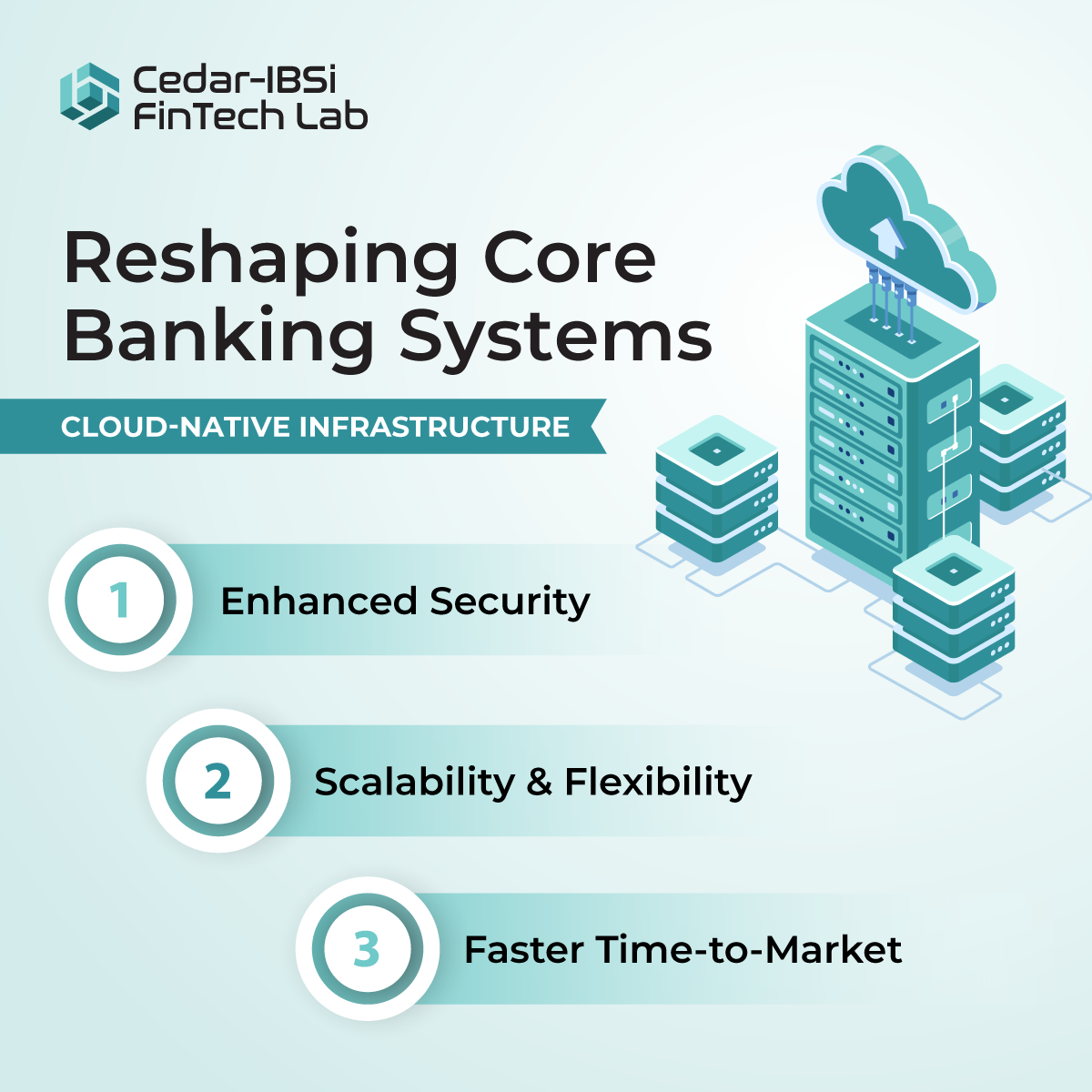
How Cloud-Native Infrastructure is Reshaping Core Banking Systems

Moving core banking systems to a cloud-native architecture offers numerous advantages.

Enhanced Security: Security is a top priority for any financial institution. Cloud-native infrastructure offers advanced security features, such as automated patch management, encryption and continuous monitoring. These capabilities help banks protect sensitive data and comply with stringent regulatory requirements.

Faster Time-to-Market: In the competitive banking sector, the ability to quickly launch new products and services is a significant advantage. Cloud-native systems enable rapid development and deployment cycles, allowing banks to respond swiftly to market changes and customer needs. This agility fosters innovation and helps banks stay ahead of the competition.

Scalability and Flexibility: Cloud-native infrastructure allows banks to scale their operations effortlessly. Whether it’s handling a surge in transactions during peak times or expanding services to new regions, cloud-native systems can dynamically adjust to meet demand. This flexibility is crucial for banks looking to innovate and grow without being hampered by their IT infrastructure.

Real-World Applications

Emirates NBD, one of the largest banking groups in the Middle East, has been at the forefront of adopting cloud-native technologies. The bank has implemented a cloud-native core banking system to enhance its digital banking services. This transition has enabled Emirates NBD to offer more personalized and responsive services, improve operational efficiency and rapidly deploy new features to meet customer demands.

Mashreq Bank, another major player in the GCC region, has leveraged cloud-native infrastructure to drive its digital transformation. By adopting microservices architecture and containerization, the bank has been able to scale its operations dynamically and enhance its customer experience. The bank’s cloud-native approach has also facilitated the integration of advanced analytics and artificial intelligence, enabling more informed decision-making and innovative product offerings.

Capital One is another notable example. The bank has been a pioneer in adopting cloud-native infrastructure, migrating its entire data centre operations to the cloud. This move has not only reduced operational costs but also enhanced the bank’s ability to innovate. Capital One now uses cloud-native technologies to leverage big data and machine learning, providing customers with tailored financial advice and fraud detection services.

State Bank of India (SBI), the largest public sector bank in India, has adopted cloud-native technologies to support its digital transformation initiatives. SBI’s cloud-native infrastructure has enabled the bank to handle large volumes of transactions efficiently, enhance its cybersecurity measures, and offer a seamless banking experience to its customers. The bank’s cloud-native approach has also facilitated the integration of new technologies such as blockchain and artificial intelligence.


Cloud-native infrastructure is not just a technological trend; it’s a strategic imperative for banks. By embracing cloud-native technologies, banks can position themselves for long-term success in a rapidly evolving digital landscape. As the banking industry continues to innovate, cloud-native infrastructure will play a pivotal role in shaping the future of core banking systems.

CategoriesExclusive

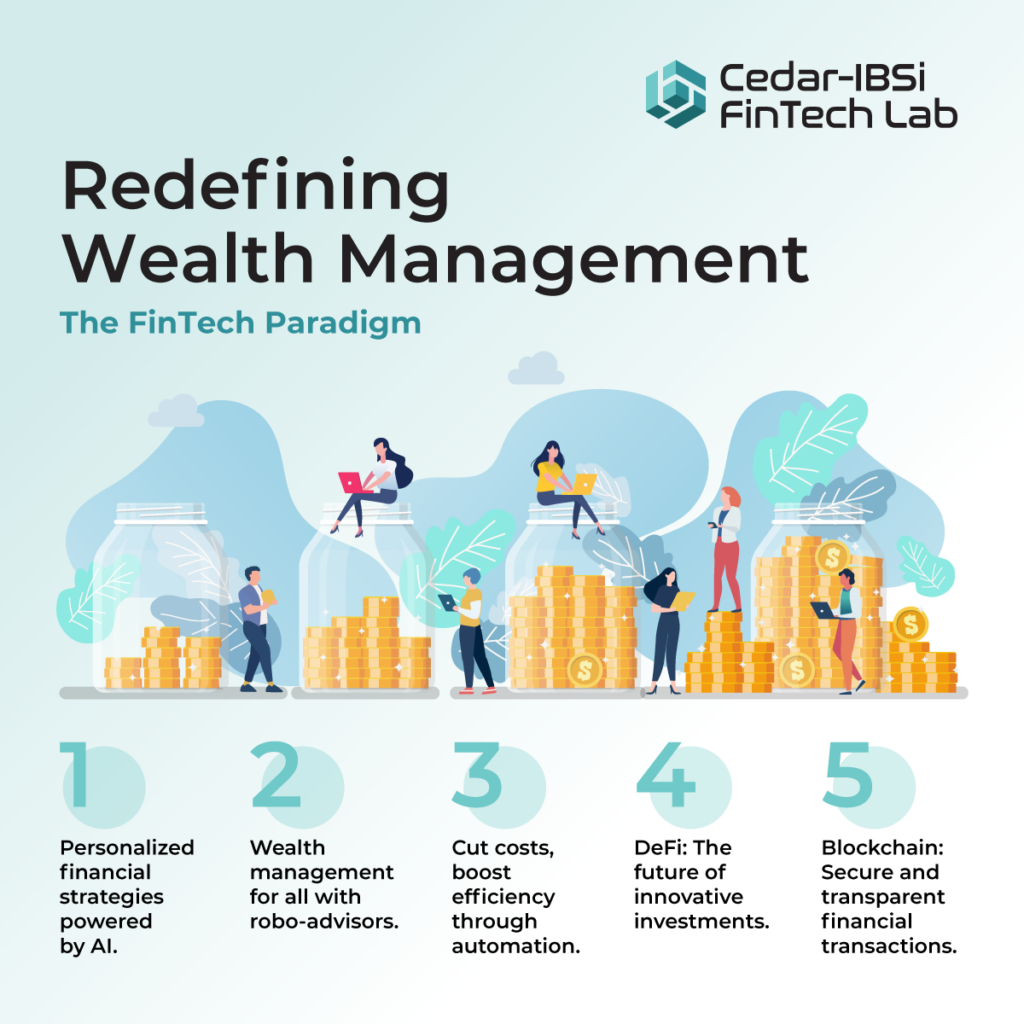
Redefining Wealth Management: The FinTech Paradigm

September 13, 2024

The WealthTech landscape is experiencing a paradigm shift, fuelled by the innovation in the FinTech sector. As decentralized finance (DeFi) platforms upend traditional models and personalized financial planning becomes more prevalent, we are witnessing a rapid evolution towards a more inclusive and efficient financial ecosystem.

Central to this transformation is the shift from generic financial strategies to highly tailored financial planning. Leveraging cutting-edge technologies such as artificial intelligence (AI) and big data analytics, FinTech platforms offer bespoke financial solutions. These platforms sift through extensive data sets to tailor financial strategies that align with individual profiles, encompassing risk tolerance and long-term goals. This personalized methodology not only heightens client satisfaction but significantly bolsters the prospects of meeting specific financial ambitions.

The democratization of financial services is another significant aspect of this revolution. Traditionally, expert financial advice was a privilege of the few. Now, FinTech innovations, including robo-advisors, are breaking these barriers by offering cost-effective, automated investment solutions to a wider audience. This shift not only broadens access to financial advice but also promotes financial inclusion globally, thus creating new market opportunities and empowering a diverse range of economic participants.

Efficiency and cost-effectiveness continue to be significant benefits innovation in FinTech. Traditional wealth management entities are burdened by high operational costs rooted in manual processes and legacy systems. Through automation and technological advancements, new financial technology is streamlining these processes, curtailing human error, and reducing costs—enabling competitive pricing and allowing wealth managers to devote more time to strategic client engagement rather than mundane administrative tasks.

The future looks even brighter for wealth-tech. The integration of blockchain technology is set to offer transparency and security in financial transactions. Moreover, the growing domain of DeFi platforms will challenge the conventional norms of wealth management, presenting innovative investment avenues and complexities.

The synergy of FinTech and wealth management is crafting a financial landscape that is simultaneously more accessible, personalized, and efficient. As we move forward, the role of FinTech will be increasingly pivotal in sculpting the future contours of wealth management, benefiting consumers and the wider financial sector alike.

CategoriesExclusive

Driving Financial Services on ONDC: An Invitation to Tech Innovators and Banks

August 26, 2024

The digital commerce landscape is undergoing a transformative shift with the advent of the Open Network for Digital Commerce (ONDC). This initiative is not just a platform but a movement towards a more inclusive and competitive marketplace. For banks and technology companies, ONDC represents a frontier of opportunities to redefine financial services. Central to this transformation are technology providers (TSPs), whose contributions are crucial in expanding ONDC’s reach.

Why ONDC Matters

ONDC’s purpose is to democratise the access to suppliers and create a platform for buyers across various industries. ONDC’s decentralised, node-based architecture allows for greater market access and competition. This approach ensures that smaller merchants can participate on equal footing with larger enterprises, thereby democratising digital commerce. ONDC does not operate as a traditional marketplace with a centralised front-end or back-end. Instead, it functions as a decentralised network where various participants, including buyers, sellers, and technology service providers (TSPs), can interact and transact seamlessly. The platform emphasises high-provenance data flow and connectivity, ensuring that all transactions are secure and transparent.

The ONDC Advantage

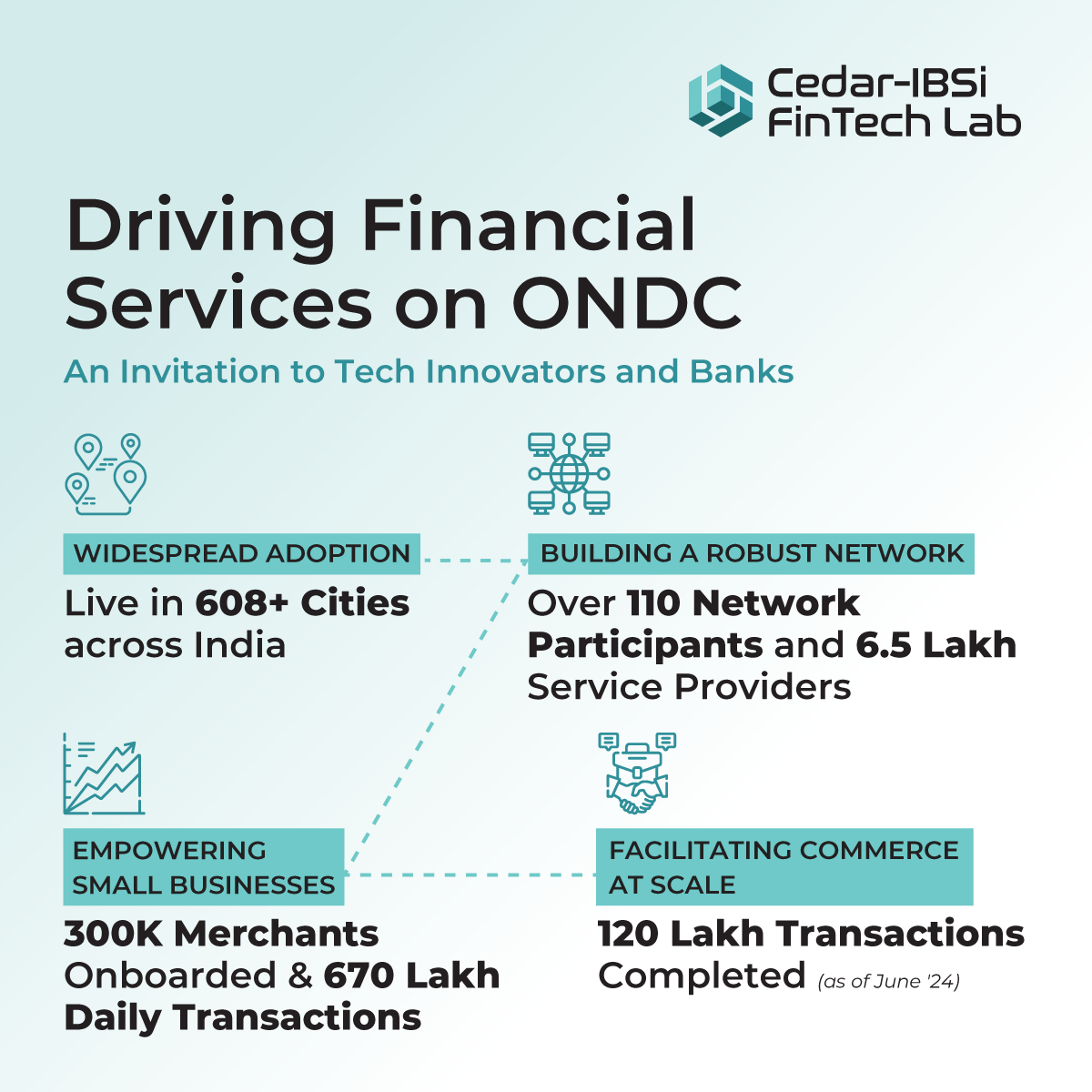
The platform works differently from traditional online shopping sites. It doesn’t have a usual front-end or back-end. Instead, it acts as a marketplace where different users can connect and do business, making data flow more secure and benefiting everyone involved. As of July 2024, the platform is live in 608+ cities with 10 domains including the financial services domain of access to credit. The platform has 110 network participants with 6.5 Lakh sellers/service providers. The platform has fulfilled 120 Lakh cumulative transactions till June 2024.

Expanding Financial Service Distribution

For banks and FinTech firms, ONDC offers a groundbreaking opportunity to reach new markets by building a strong distribution layer that connects seamlessly with various sell-side apps.
Thanks to ONDC’s node-based architecture, technology providers can facilitate these connections, allowing financial institutions to tap into a broader customer base, including those in rural and remote areas. The platform’s low-cost participation model, supported by TSPs, makes it easier for financial services to integrate and scale within the ONDC ecosystem, thereby lowering barriers to entry.
For instance, an NBFC based in a metro city like Mumbai will not plan to open a physical branch in rural region due to the high cost of operations and customer service. However, through the ONDC framework, they can lend to a consumer in the rural most region of the country expanding their distribution reach seamlessly. This is a critical aspect of financial inclusion, as it allows financial services to be more accessible and relevant to different segments of society.

Advancing Product Sachetisation and Financial Inclusion

One of ONDC’s key strategies is product sachetisation—offering small, easy-to-access financial products like micro-loans, small-ticket mutual funds, and term insurance. Technology providers play a vital role in this by creating the digital infrastructure that makes these products available on the platform. By supporting the distribution of these small-scale financial products, TSPs help financial institutions reach a broader audience, especially those who have historically been excluded from traditional banking services.
This strategy aligns perfectly with ONDC’s mission of promoting financial inclusion. This democratisation of financial services is a significant step toward bridging the financial inclusion gap in India.

Role of Technology Service Providers

Technology Service Providers (TSPs) are crucial in offering a range of software applications either as standalone solutions or via cloud-based services. TSPs enable seamless business operations on the network, empowering players to participate in e-commerce without requiring in-house technology capabilities. TSPs also serve as drivers for achieving ONDC goals and attracting businesses of various sizes to join the network.

Conclusion

As ONDC continues to grow, with around 300,000 merchants onboarded and 6.7 million daily transactions, the potential for financial services integration is immense. Early adopters like DMI Finance and Aditya Birla Finance have already connected with the ONDC network, and several other financial institutions are in the process of joining.
Banks and FinTechs must align with ONDC’s objectives to provide credit for income generation, insurance for protection, and mutual funds for wealth accumulation. Technology providers play a crucial and dynamic role in the success of ONDC, particularly in the realm of financial services.
It is imperative that the technology providers bring their banking and financial institutions clients to collaborate to build seamless digital journeys on the ONDC platform.
As ONDC continues to grow, the partnership between technology providers, financial institutions, and other stakeholders will be essential in ensuring that the benefits of digital commerce reach every corner of the country, paving the way for a more inclusive and equitable financial ecosystem.

CategoriesExclusive

FinTech Surge in MENA: 5 Key Enablers Driving Growth in the Industry

June 12, 2024

The Middle East’s FinTech ecosystem, though relatively young, has experienced remarkable growth since the establishment of its first start-ups in 2015. Today, the MENA region hosts over 800 FinTech startups valued collectively at $15.5 billion, with the majority based in the United Arab Emirates.

A report by MAGNiTT highlighted a staggering 183% year-over-year growth in funding for MENA FinTech startups in 2021, marking the highest annual growth rate in the past five years. Furthermore, predictions from Saudi Arabian technology venture capital indicate the emergence of 45 unicorns worth over $100 billion by 2030.

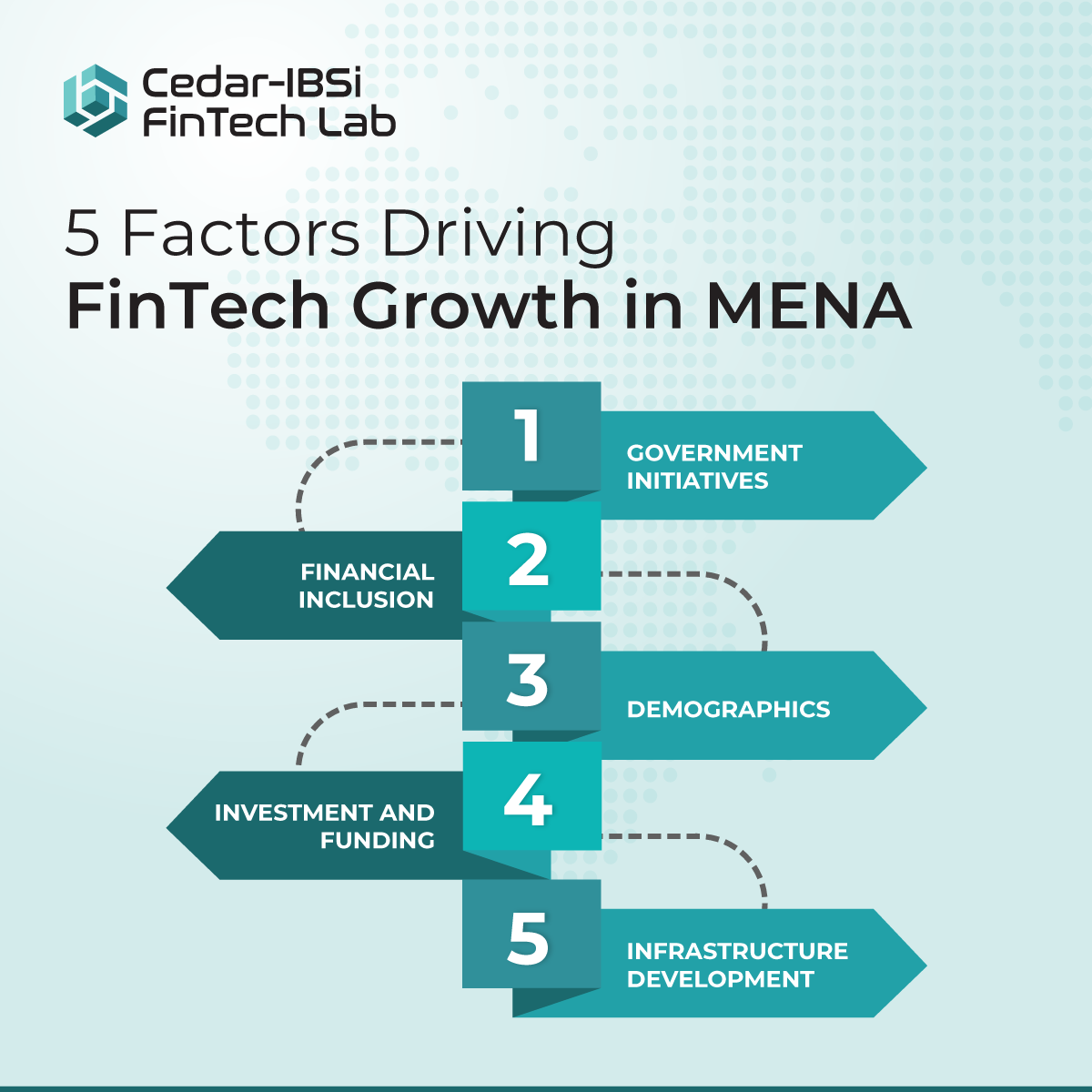
Let’s explore the five key enablers driving this exponential growth in the MENA FinTech industry.

  1. Government Initiatives

Government reforms and initiatives have played a crucial role in fostering the FinTech ecosystem in the MENA region. Middle Eastern governments are actively promoting privatization, increasing public-private partnerships, and monetizing infrastructure assets to drive financial inclusion. By implementing FinTech-friendly regulations, they support the growth of home-grown startups and attract global players. Regulatory sandboxes across the region have been established to facilitate the adoption of digital financial solutions, further accelerating FinTech growth.

For example, the UAE and Saudi Arabia have been at the forefront, launching initiatives such as National Instant Payments Platforms (IPPs) to digitalize payments and enhance financial inclusion. This supportive regulatory environment has been instrumental in creating a fertile ground for FinTech innovation.

  1. Financial Inclusion

One of the primary drivers of FinTech growth in the Middle East is the urgent need to address financial exclusion. Over 70% of the population in the region does not have access to traditional banking services. FinTech startups have emerged as a solution to bridge this gap, offering innovative financial products and services where traditional banks have struggled.

The launch of instant payment platforms by the UAE and Saudi Arabia’s central banks exemplifies the region’s commitment to enhancing financial inclusion. These platforms aim to streamline and digitalize payments, making financial services more accessible to a broader population.

  1. Demographics

The MENA region boasts a young and tech-savvy population, which has been a significant factor in the growth of the FinTech sector. With over 450 million people, more than half of whom are under 25 years old, the region represents a vast market of potential customers who are eager to adopt new technologies. This youthful demographic is driving demand for digital financial solutions, creating a robust market for FinTech startups.

High mobile penetration rates further support this growth. The Middle East has achieved 100% mobile penetration, providing a solid foundation for FinTech companies to reach a large and receptive audience. As digital natives, this young population is more likely to embrace innovative financial technologies, fuelling the expansion of the FinTech sector in the region.

  1. Investment and Funding

The influx of investment and funding into the MENA FinTech sector has been another critical enabler of growth. In 2021, the region saw a 183% increase in funding for FinTech startups, indicating strong investor confidence in the market’s potential. This surge in investment has provided startups with the necessary capital to scale their operations, develop new products, and expand their reach.

The rise in funding has also led to an increase in the number of financial firms in the region. As of February 2022, the MENA region was home to more than 3,600 financial firms, a 25% increase from the previous year.

  1. Infrastructure Development

The development of robust infrastructure has been fundamental to the success of the FinTech industry in MENA. Governments have invested heavily in building the necessary infrastructure to support digital financial services. This includes high-speed internet connectivity, secure payment gateways, and regulatory frameworks that ensure a safe and efficient financial ecosystem.

For instance, the establishment of digital-only banks and the introduction of blockchain technology for secure transactions are examples of how infrastructure development is driving FinTech growth. The conducive environment for innovation in the region, is attracting both local and international FinTech companies.

As these enablers continue to evolve and strengthen, the MENA region is poised to become a global hub for FinTech innovation, offering exciting opportunities for startups, investors, and consumers. Much like Cedar-IBSi FinTech lab, which has been home to global technology companies who need a “soft-landing” opportunity into MENA and India. Join the FinTech Lab to tap into the Middle East banking technology today.

CategoriesExclusive

BankTech in India: Transitioning beyond transactions to innovative interactions

April 17, 2024

Well, there was a time when banking in India was a bit of a challenge, but then came along BankTech and revolutionized the customer experience and transformed the way banks operate. Due to the advancements in BankTech we now live in a world where you can easily access your bank for all your needs, thanks to improved products, services, and technology.

With globalization and digitalization, Indian banks leveled up big time. They have become more competitive globally, offering better services to everyone. The secret sauce of course is BankTech – a mix of advanced technologies making banking smoother and more efficient.

Now, technology-driven banks are on a roll, planning to bring even more awesome stuff for customers. The next-gen technologies are like superheroes, strengthening the banking sector and keeping it up to date in our fast-paced digital world.

“FinTech” and “BankTech,” are way more than fancy jargon… they are like magic spells, transforming the financial landscape of India. In this exciting tale, we also shine a spotlight on B2B FinTech startups – the heroes behind the scenes, driving innovation and making banking in India a truly remarkable story.

Now, what sets these heroes apart is that they represent a significant shift in how financial institutions operate. No longer confined to traditional, rigid banking technology setups, they now embrace agile, cloud-based solutions. These solutions prioritize speed, customization, and security, ushering in a new era of banking excellence.

The worldwide move toward integrating cloud services into next-gen core banking and micro-services architecture is fueled by consumer expectations for seamless experiences and groundbreaking solutions. Cloud technology empowers banks to effortlessly scale APIs, pinpoint areas for enhancement without system-wide disruptions, and consistently elevate their services.

Indian banks have adopted technology-driven solutions aimed at boosting revenue, improving customer satisfaction, streamlining costs, and mitigating enterprise risks. However, the effectiveness of these initiatives varies across banks due to differences in their technology implementation strategies. Various players in the banking sector encounter challenges related to enhancing the value of core banking operations, modernizing digital initiatives, transitioning from data accumulation to actionable insights, adapting to evolving risk management practices, transitioning from cash-based to electronic payment systems, addressing issues related to financial inclusion, empowering employees, and fostering innovation.

In this tech-forward landscape, startups focusing on micro-solutions and targeted improvements are pivotal in driving innovation within financial institutions.

Recognizing this necessity, Cedar-IBSi Capital has introduced initiatives like the FinTech Lab and supporting programs, with the aim of supporting early-stage and pre-Series-A companies in the FinTech and BankTech sectors. Drawing from the insights gained through our operations in Dubai, we are enthusiastic about expanding our presence in India to further our mission of fostering innovation in the financial domain.

If you’re interested in meeting our team, feel free to reach out to us.  Let’s come together and explore how we can collaborate to shape the future of banking technology.

Call for support

1800 - 123 456 78
info@example.com

Follow us

44 Shirley Ave. West Chicago, IL 60185, USA

Follow us

LinkedIn
YouTube